A journey of faith, purpose, and humble beginnings.
Kerala, the birthplace of Kuriaksoe Elias Chavara, is from the point of view of its geographical position, the joint gift of the ever-blue Arabian Sea on the west and the evergreen Western Ghats on the east....
Though very small in area among the states of the Indian Union, the picturesque variety of the landscape and the abundance of plant and animal life, invest this region with a distinct personality. Kerala culture has been an integral part of the mainstream Indian culture. At the same time its special geographical position enabled Kerala to enjoy its own outlook, way of life, culture and institutions peculiar to itself. From ancient times Kerala emerged as the meeting ground of all Indian religions and philosophical systems as well as the most important world religions such as Judaism, Christianity and Islam.
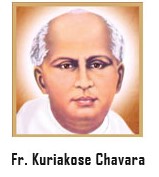
On the Arabian coast at Kainakary in Kuttanadu, in the diocese of Changanaserry, Kerala, India Kuriakose Elias Chavara was born on February 10, 1805 as the sixth child of parents Kuriakose and Mariam. The Chavara family is believed to be the descendant of the Pakalomattam family, one of the four that claim descent from the time of St.Thomas at Palayur, central Kerala.
He was baptized on 18 February and on 8th September 1805 the child Kuriakose was dedicated to the Blessed Virgin Mary at the Marian shrine in Vechoor.
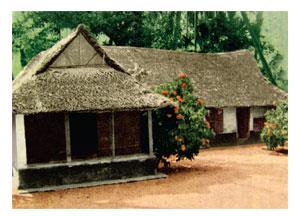
At the age of five, he began his studies in the village school, called Kalari under a village master called Ashan. There he continued his studies until he was ten years old. Then Malpan Thomas Palackal invited him to his seminary at Pallipuram. Subsequently as he was too young he spent about two years in the parish rectory under the care of the zealous and loving parish priest. Here his parents also discerned his divine call. In the year 1818 he joined the Pallipuram seminary under the tutelage of Malpan Thomas Palackal. Not long after the tonsure he received, there was an epidemic in Kainakary and surroundings. His loving father, his good mother, and his only brother fell prey to the epidemic.
As there was no heir in the family, relatives compelled him to discontinue seminary life and comeback to the family. But he arranged the family affairs in such way that he could continue his priestly studies. On 29 November 1829, at the age of 24, Bishop Maurelius Stabilini, Vicar Apostolic of Verapoly ordained him priest at St. Andrew's Church, Artungal.
Historical Genesis
Foundation of CMI Congregation
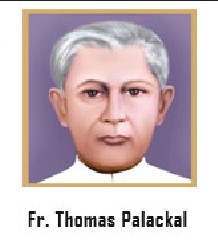
Co-Founder
Fr. Thomas Palackal
Senior priest and rector at Pallipuram seminary, mentor and visionary of community life.
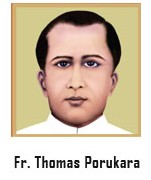
Co-Founder
Fr. Thomas Porukara
Zealous apostle and co-architect of the monastery foundation at Mannanam.
Saint & Co-Founder
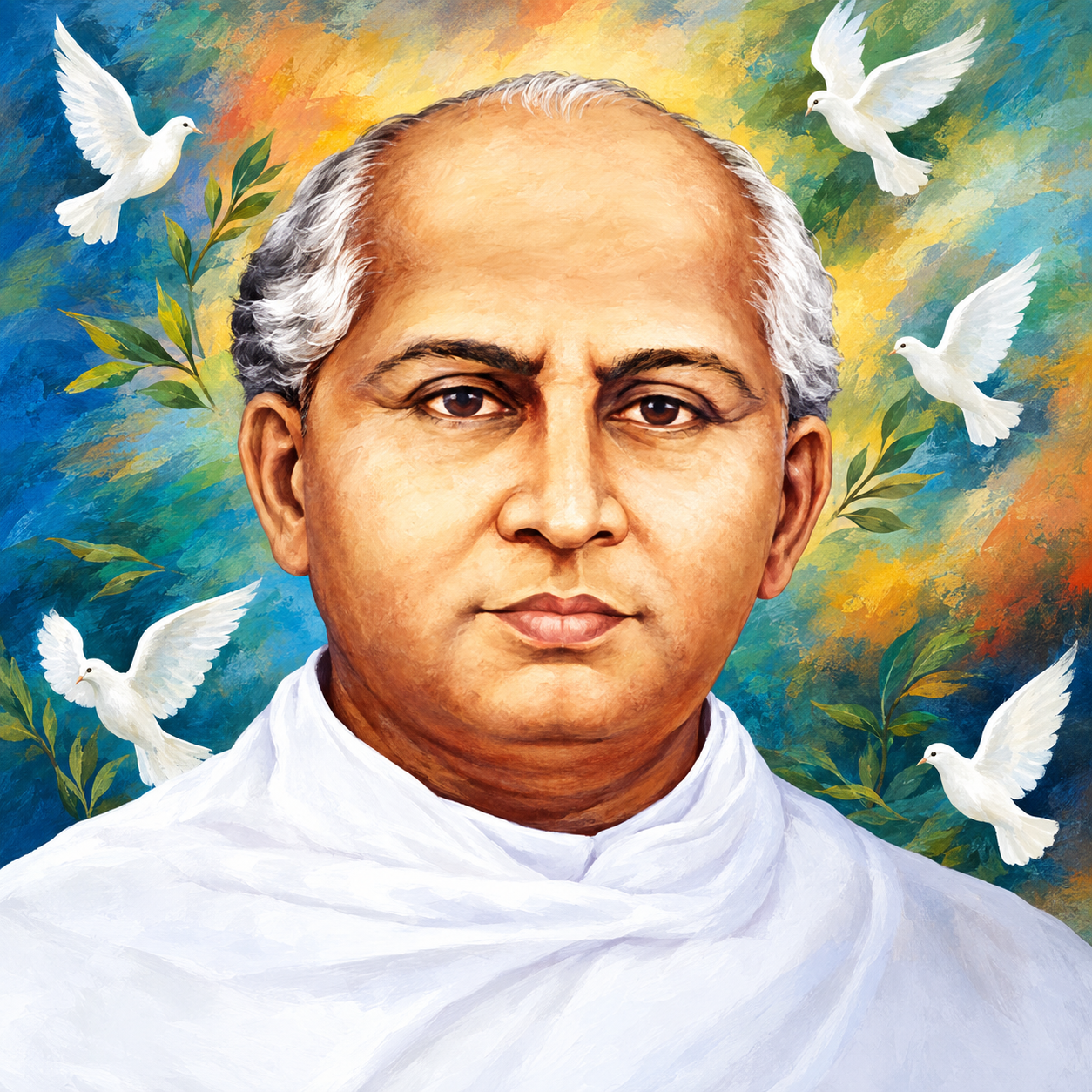
St. Kuriakose Chavara
First Prior General, educational pioneer, and social reformer of Kerala.
Frs. Thomas Palackal, Thomas Porukara and Kuriakose Chavara having the same motivation of starting a religious community life, had several occasions to meet together at the vicariate of Verapoly or at the seminary of Pallipuram to discuss the idea of a religious institute.
By the words of blessed Chavara, from the first page of his chronicle, we may allude to the request fathers Palackal and Porukara placed before the bishop Maurelius Stabilini:
“Seeing that a lot of good has not been done due to the absence of a Thapasu Bhavanam (house of discipline) in Kerala even for priests, we desire to start a 'Darsana Veed' (house of vision) at least for priests.”
— Words of Blessed Chavara, First Page of His Chronicle
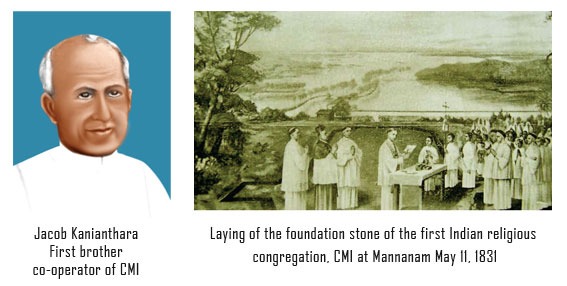
The Vicar Apostolic, finally on 1st November 1829, granted permission to establish a religious house. On May 11, 1831, the foundation stone for the proposed religious house was laid at Mannanam near Kottayam in Kerala dedicating it to St. Joseph.
This was the first indigenous religious institute for men in the Indian Church of modern times, known now as Carmelites of Mary Immaculate (CMI). For, if at all there existed any religious institute before, no one continued upto that time.
Jacob Kanianthara, who in 1865 became the first professed brother co-operator in the congregation also co-operated with those three founding fathers from the beginning.
Laying of the foundation stone of the first Indian religious congregation, CMI at Mannanam, May 11, 1831 & Jacob Kanianthara
Journey towards the excellence
Carmel Province is a leading missionary and educational religious community committed to excellence, spiritual renewal, and compassionate social service – trusted for faith and integrity.
SPIRITUAL WITNESS
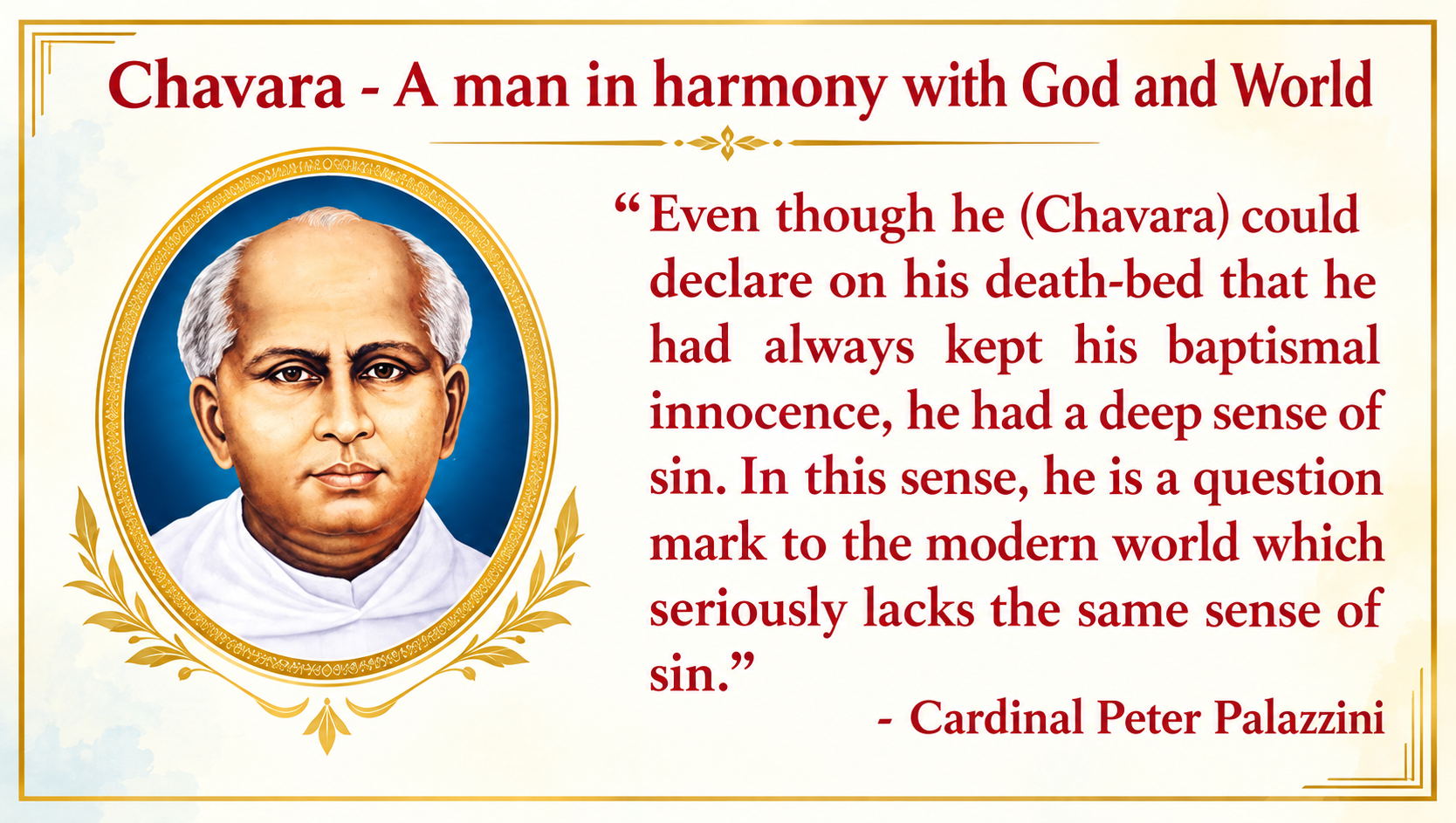
Chavara: A Question Mark to the Modern World
Saint Chavara is an answer to the modern world — a world tensed with ceaseless activity and fatigued with superficial involvement; a world that feels loneliness without God and neighbor; a world that struggles to pause in silence and pray. Saint Chavara lived in profound harmony with God and the world, seamlessly uniting contemplative prayer with zealous action, and serene solitude with loving companionship.
“Even though he (Chavara) could declare on his death-bed that he had always kept his baptismal innocence, he had a deep sense of sin. In this sense, he is a question mark to the modern world which seriously lacks the same sense of sin.”
— Cardinal Peter Palazzini, Prefect of the Congregation for the Cause of Saints